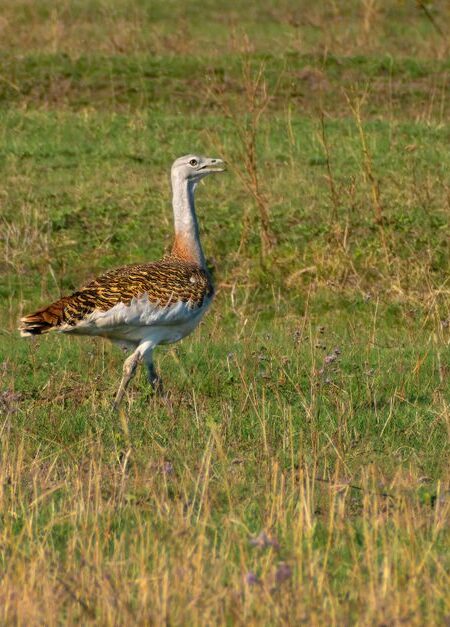





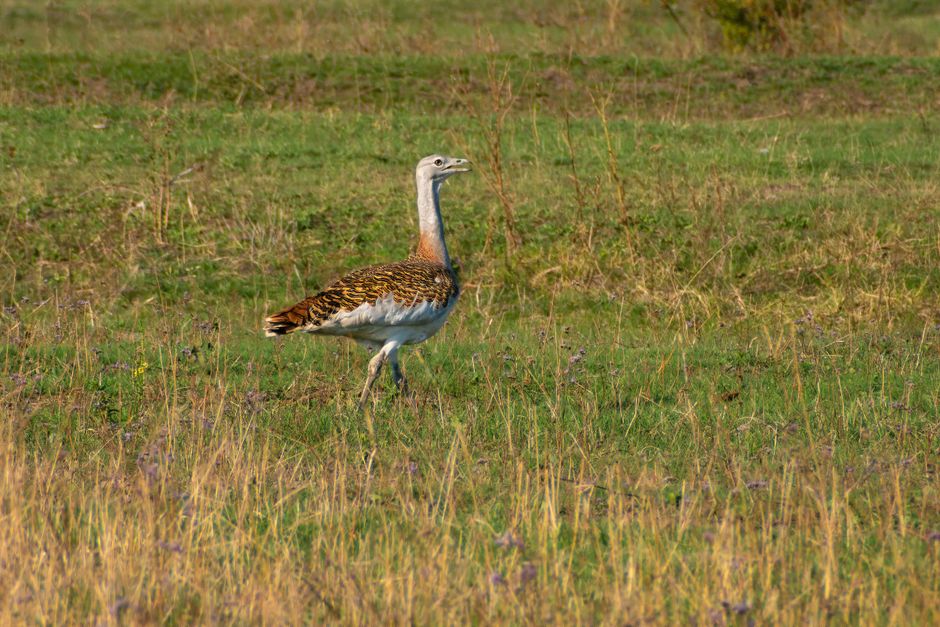
On the Salisbury Plain in Wiltshire, one of the world’s heaviest flying birds, the Great Bustard, can be found. This rare species, recognized for its impressive size and elaborate courtship rituals, has become a unique feature of the local landscape.
Return of the Great Bustard
The Great Bustard was once native to the UK but disappeared from the region in the 19th century due to hunting and habitat loss. In 1998, efforts to reintroduce the bird began, with the first chicks released on Salisbury Plain in 2004. Since then, the population has gradually increased, and the area now supports a small but growing group of these birds.
Distinctive Characteristics
Adult male Great Bustards can weigh up to 16 kilograms, making them among the heaviest flying birds globally. Their striking plumage and dramatic mating displays, where males fan their tails and puff out their chests, are notable features. Females are smaller and more subtly colored, which helps them remain inconspicuous while nesting.
Conservation Efforts
The reintroduction project has relied on collaboration between conservationists, local farmers, and the Ministry of Defence, which manages much of Salisbury Plain. The area’s restricted public access and extensive grasslands provide a suitable habitat for the birds. The project continues to monitor the population and manage threats such as predation and disturbance.
Public Awareness and Future Prospects
While the Great Bustard remains relatively unknown to many residents and visitors, those involved in the project hope that awareness will grow as the population becomes more established. The bird’s presence is seen as a symbol of successful conservation and the potential for restoring lost species to the British countryside.

Other Articles

Hotel Review: InterContinental Park Lane, Mayfair in London
Gateway Jax clears first step for tower in downtown Riverfront Plaza